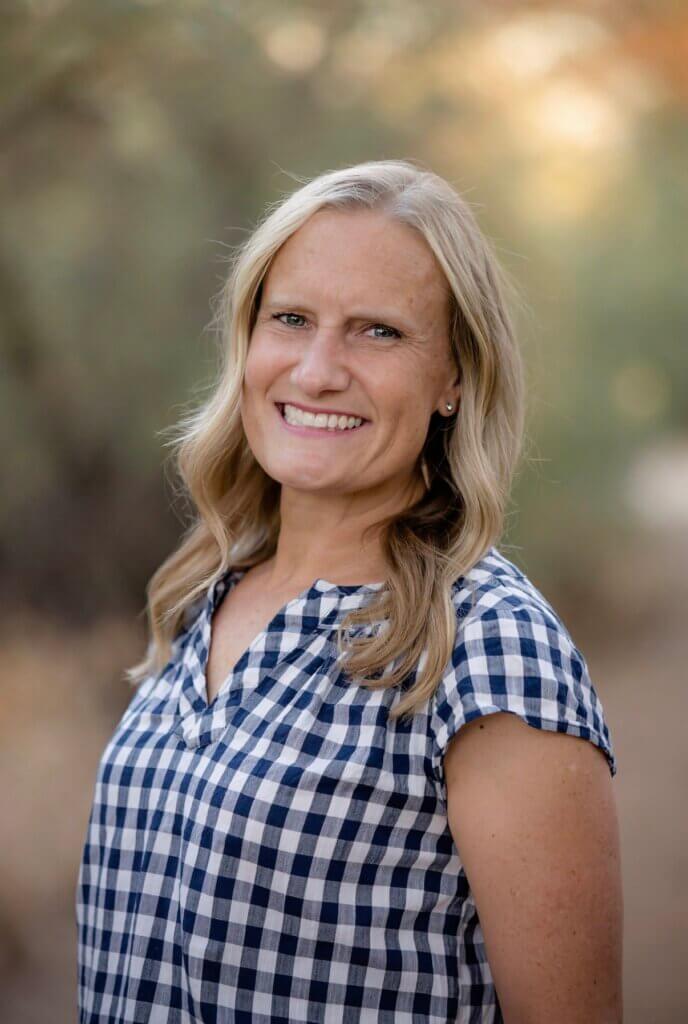
Jane Andersen Named One of the 2026 Impact Makers of the Year
We are proud to announce Jane Andersen as one of the 2026 Impact Makers of the Year. This honor celebrates leaders who embody our Principles of Doing® while driving meaningful progress on Arizona’s most pressing challenges through Impact Maker initiatives.

Jane has been instrumental in launching and leading the Civic Engagement Impact Team, recognizing the urgent need to address increasing polarization and declining trust in institutions across Arizona. As the team’s founding chair, she guided the group through its early development and helped establish key initiatives such as the Dinner & Dialogue program, which creates intentional spaces for Arizonans to engage across lines of difference and build skills for respectful civic dialogue. Her leadership has also helped the team provide nonpartisan resources to help residents better understand policy issues and participate thoughtfully in the democratic process.
Through her commitment to open dialogue, trust-building, and putting Arizona first, Jane exemplifies the values that define the Impact Maker community. Her work continues to strengthen civic understanding and create opportunities for Arizonans to engage with one another in meaningful, constructive ways.
Keep reading to learn more about Jane’s work and leadership journey as an Impact Maker.
VL: Which of Valley Leadership’s Principles of Doing® has most guided your work with the Civic Engagement Impact Team, and how has that principle shaped the way you lead?
JA: When I consider the work of the Civic Engagement Impact Team, one Principles of Doing® that stands out is building trust. In a world that increasingly presents us opportunities to divide, work that focuses on cultivating deep relationships of trust and civility is rare and needed. Too often we curate our lives so that we hear and experience only things that are comfortable to us. We simply seek confirmation of what we believe. Valley Leadership’s Principles of Doing, however, encourage us to deliberately engage with those holding perspectives different than our own. In these conversations our goal should not be simply to change minds but to listen with curiosity and walk away better able to articulate an opposing point of view.
As I work with civic and political leaders in Arizona, it would be easy for me to seek out affirmation from those that take the same positions I do. But that would greatly limit my work. I would miss the chance to humbly seek understanding of a different perspective or even the opportunity to clarify my own point of view as I better understand another side. Refusing to build relationships with those outside my natural coalition would leave me responding to a caricature of who I think someone is rather than getting to know individuals and see them as a whole person. Building trust isn’t just a tactic; it’s the best way to operate.

VL: You helped build and launch the Civic Engagement Impact Team from the ground up. What gap did you see that made this work feel urgent, and what motivated you to step into a leadership role early on?
JA: I absolutely loved my time in the Catalyze program. As I considered which Impact Team to join I remember not quite knowing which direction to go in since much of the work seemed important and needed. At the end of the day, however, I realized my time in Catalyze left me very interested in how people engage–the ways in which Arizonans feel informed and empowered to advocate on whatever issues they care most about. At our Catalyze graduation, I approached Dave with a question: “Have you ever thought about creating a team around civic engagement?” We had a great discussion about our polarized civic culture and the exhausted majority that often feels powerless to create change. True to the Principles of Doing, Dave contacted me a couple of months later to let me know Valley Leadership would explore creating a new Impact Team. I was ready to get to work.
In More in Common’s publication “Social Connection Across Lines of Difference”, they cite that 72% of Americans believe we should engage with others who are different from us. However, only 4 in 10 Americans actually do it. The top two reasons why? They don’t have the opportunity to do it and…they don’t have the energy. I think we can all relate! Through the Civic Engagement Impact Team’s Dinner and Dialogue series, we are giving people an easy way to practice civil discourse, manage disagreements, and share a meal with fellow Arizonans. Just like any skill, being adept at civic engagement takes practice and our Impact Team is ready to provide support.
VL: Dinner & Dialogue has become a cornerstone of the Civic Engagement team’s work. What have you learned from facilitating conversations across lines of difference, and why do you believe this kind of dialogue matters for Arizona right now?
JA: Our Dinner & Dialogue sessions have confirmed to me that we all have more in common than divides us. I have also learned that when you are having an in-person conversation, it can feel awkward to present a different point of view. The truth is we need to be better at constructively presenting our perspectives, especially when we are offering something new to consider in a conversation. Online we are quick to highlight differences and even respond in incredibly uncivil and unproductive ways. We have all been keyboard warriors at one point or another. In person, we may be quick to seem agreeable because it is uncomfortable to challenge the status quo. I think our civic health would benefit from more constructive online conversations (I’ve been known to extend a lunch invitation to those hounding me on social media!) and more courage to share our true beliefs during in person interactions.
VL: Looking back on the Civic Engagement team’s first 18 months, what progress are you most proud of, and what lessons shaped how the work evolved?
JA: Our diverse Impact Team has individuals from all different industries and backgrounds. Our diversity lends itself to creativity. A meeting never goes by without someone wanting to share a different perspective that may take the team in a whole new direction. As we discussed an upcoming dialogue addressing those who experience homelessness, a team member gently reminded the team that policy discussions will only go so far. We need to put some heart back in the process. She recommended we include an invitation for participants to engage with a nonprofit that does this work day in and day out. We have adjusted our planning based on this wise advice. Based on our current waiting list, we learned that there is an appetite for this work! We plan to expand our offerings and are looking for a larger space in which we can meet.
VL: You bring experience from outside Valley Leadership that deeply informs this work. How has your background in civic dialogue and accountability influenced the team’s approach to building trust and encouraging participation?
As the Arizona State Director for Mormon Women for Ethical Government (MWEG), I work to fulfill my organization’s mission to strive for a more peaceful, just, and ethical world through advocacy and empowerment. Our work is best described with these four words: peaceful, proactive, nonpartisan, and faithful. Our membership is about 40% Republicans, 36% Democrats, and 24% Independents. We come together because we have a shared set of key principles, including the rule of law and the human and civil rights of all people. While many of our women are active in party politics, we ultimately believe our loyalty is to principles, not party.

My work with MWEG has helped me realize that differences of opinions are not an obstacle when we have a shared goal. It’s an asset. As the team lead for the Civic Engagement Impact Team, I have let that truth guide me as we’ve considered which projects to pursue and how to manage different approaches to the work. Our shared goal–that all Arizonans are informed, able, and empowered to actively engage in our democracy at all levels–guides the work. I am certain that our Impact Team members land across the political spectrum but we share the goal of reducing barriers for Arizonans to engage civically.
VL: As a leader working to strengthen civic engagement in a polarized moment, what advice would you give to others who want to help rebuild trust and create meaningful, lasting impact in their communities?
If you are surrounded only by people that think and act like you, you are missing out on opportunities to grow. Listening–especially to those you disagree with–is a skill and, just like any other skill, it has to be developed. Be proactive in curating experiences where you can practice active listening, being curious about new perspectives, and building relationships with those who might be outside your comfort zone. And in today’s overemphasis on politics, don’t let a political litmus test narrow your circle of influence, even in the civic sphere. Give people the chance to be a whole person, not just who they voted for. While political loyalties may be a part of our identities, our state suffers when they become the primary ways in which we view the world. It is good to have constructive policy discussions and talk politics with others but it is vital that we get to know our neighbors, host potlucks with our families, and participate in things like book clubs with friends–especialy if this means you will get to spend time with people who vote differently than you. We are more than our politics!