Building Trust, One Conversation at a Time: Dinner & Dialogue Explores Institutional Trust
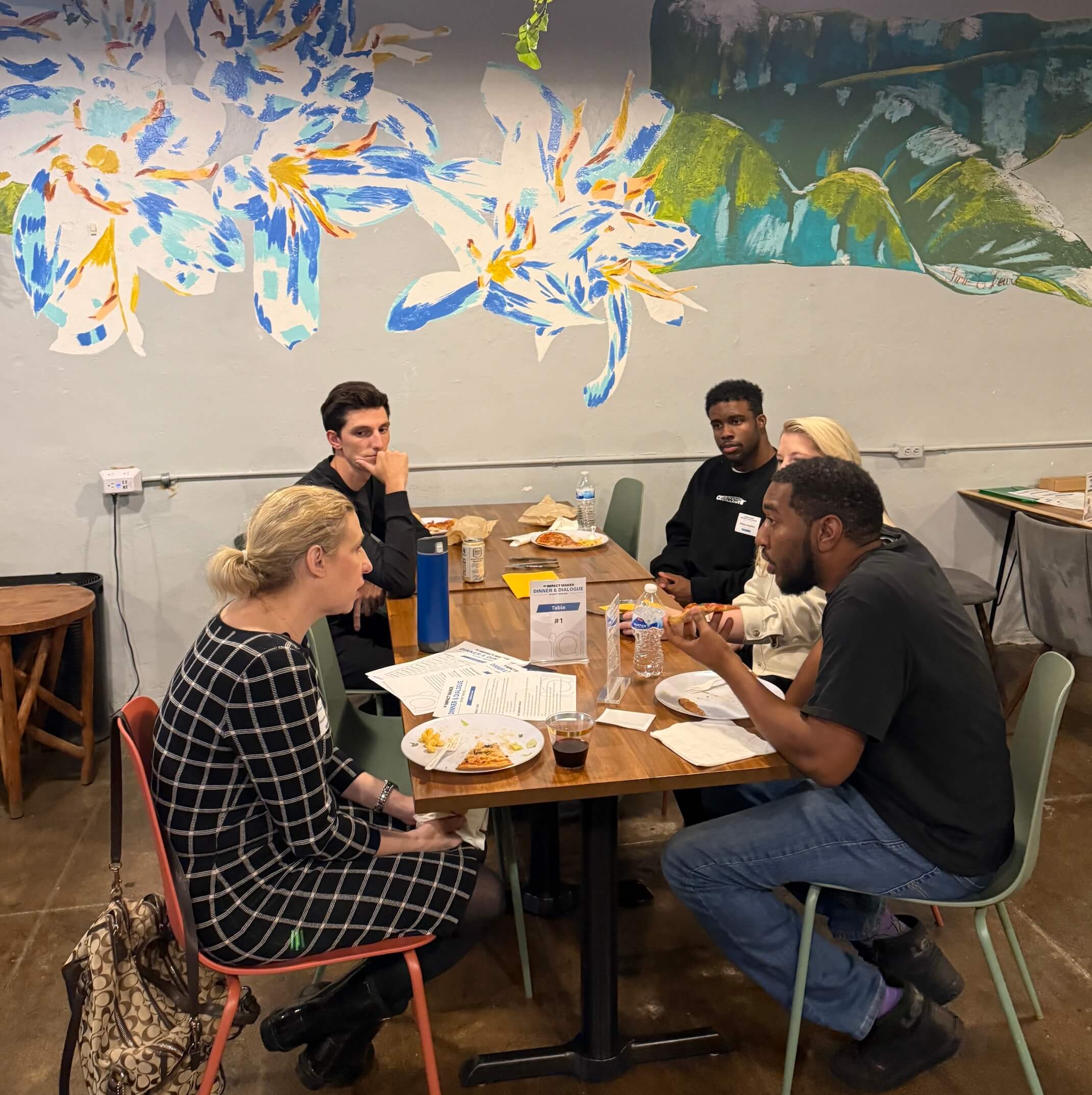
VL’s Civic Engagement Impact Team recently convened its third topic-focused installment in the Dinner & Dialogue series, turning the discussion to an issue fundamental to our democracy: Institutional Trust.
The Dinner & Dialogue series launched in the spring of 2025 with a goal of bringing Arizonans together across lines of difference to discuss our state’s most pressing issues and explore how we can move forward together. The program starts with foundational dinners where participants hone their civic listening and dialogue skills before diving into specific, complex issues.
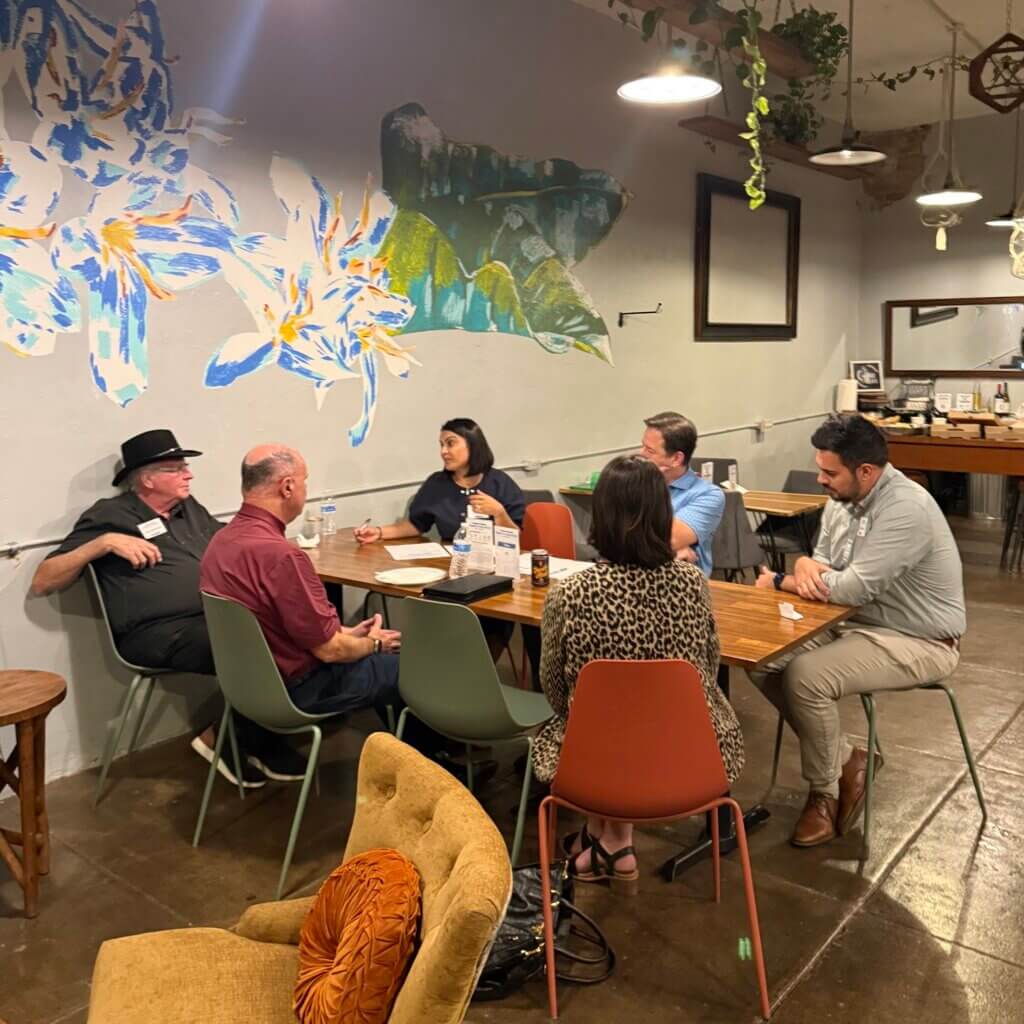
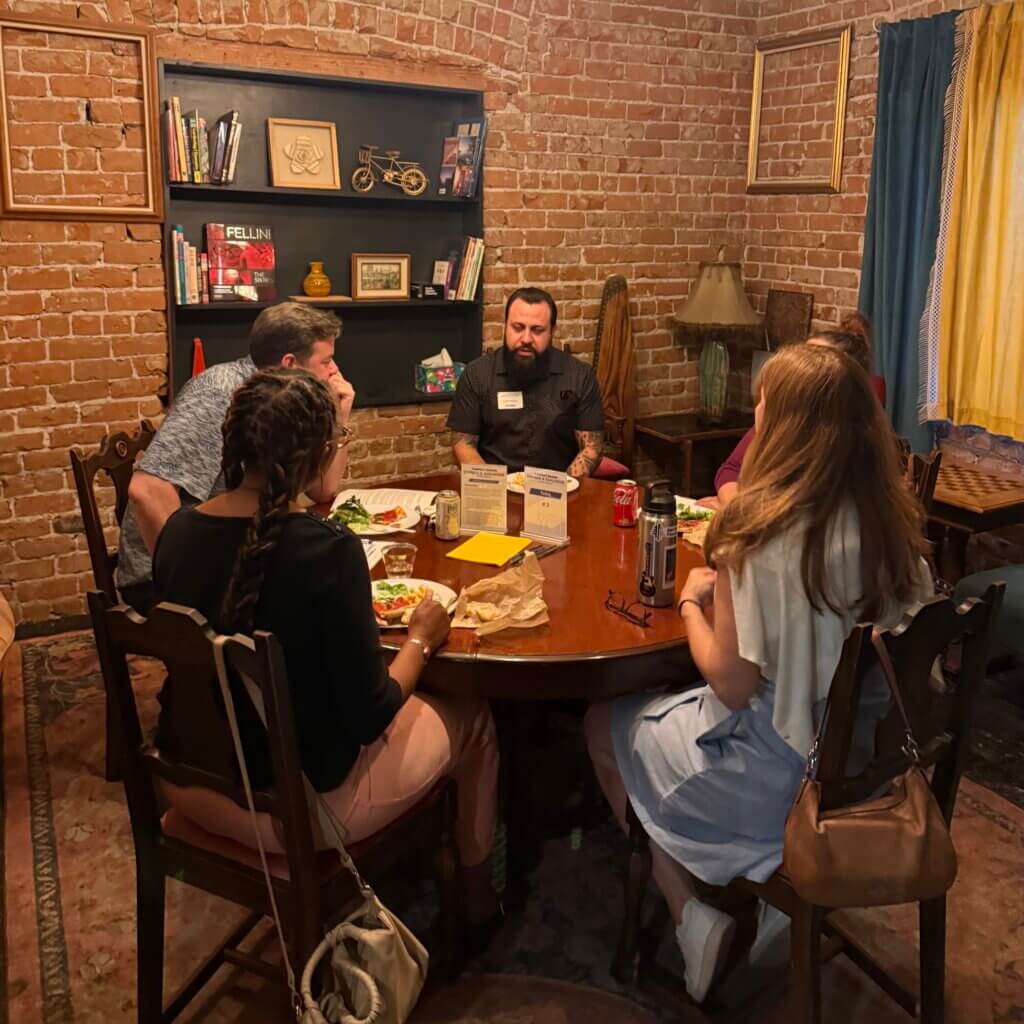
With our latest round of gatherings, the series has now hosted 16 dinners and welcomed more than 130 unique community members. Following deep dives into K-12 Education and Housing & Homelessness, our newest dinner took on the complex relationship between everyday residents and the institutions designed to serve them.
Diving into the Issue
Trust in public institutions—from local school boards and city councils to state agencies, news outlets, and federal branches—is key to a healthy democracy. Yet, many Arizonans feel a growing sense of detachment. Studies show that trust in public institutions and their processes has dropped steadily over the years, creating serious friction across society.
Nationally, only 22% of U.S. adults report trusting the federal government to do the right thing, most of the time. Locally, the effects of this disconnect are evident. In recent election cycles, 24% of eligible Arizonans opted out of voting entirely, citing disinterest or feeling that their vote wouldn’t matter.
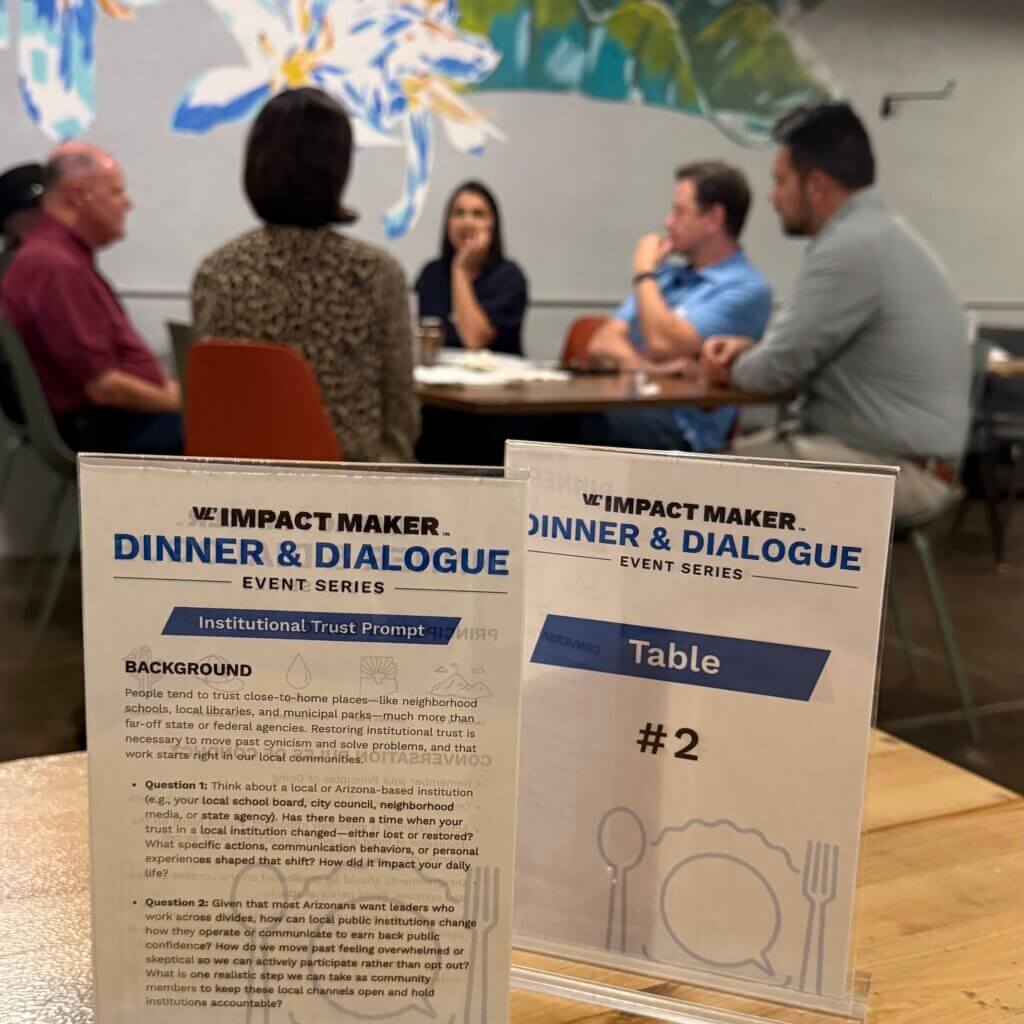
To understand what breaks trust and how it can be restored, dinner participants explored two guiding prompts:
Question 1: Think about a local or Arizona-based institution (e.g., your local school board, city council, neighborhood media, or state agency). Has there been a time when your trust in a local institution changed—either lost or restored?
- What specific actions, communication behaviors, or personal experiences shaped that shift?
- How did it impact your daily life?
Question 2: Given that most Arizonans want leaders who work across divides, how can local public institutions change how they operate or communicate to earn back public confidence?
- How do we move past feeling overwhelmed or skeptical so we can actively participate rather than opt out?
- What is one realistic step we can take as community members to keep these local channels open and hold institutions accountable?
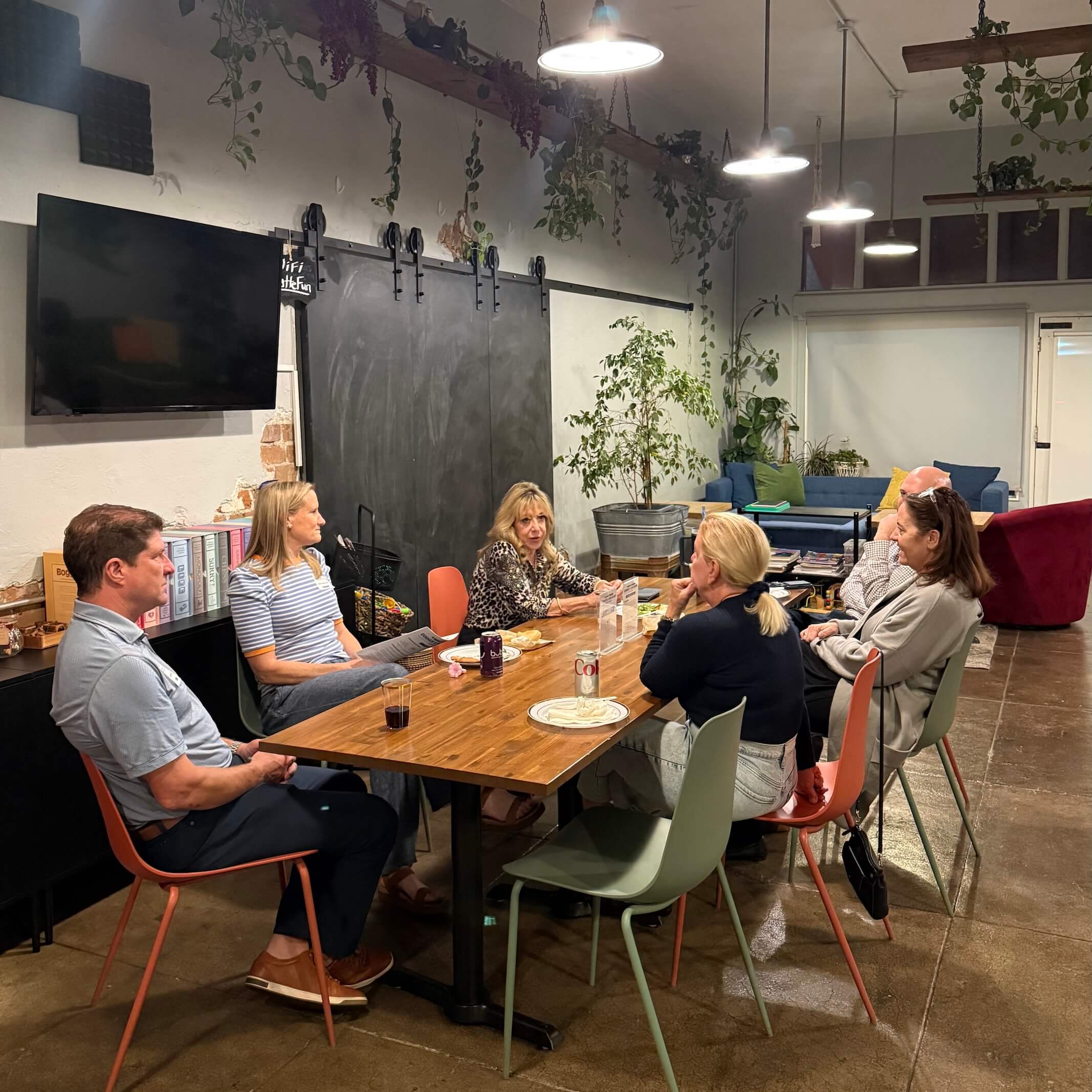
As conversations unfolded across the tables, a few key themes came into focus.
Key Takeaways from the Table
How Trust Breaks Down
Participants noted that institutional trust unravels when misconduct occurs or when decision-making lacks transparency. When leaders obscure mistakes or fail to explain the “why” behind policy shifts, skepticism can turn into cynicism. Conversely, restoring credibility requires more than statements or campaign promises. It demands competence, follow-through, and verifiable outcomes. Trust grows when institutions acknowledge their shortcomings, share accurate information candidly, and demonstrate consistency over time.
Communication Must Be a Two-Way Street
How leaders and institutions communicate can matter just as much as what they deliver. Many tables discussed how bureaucratic jargon, defensiveness, and partisan posturing alienate ordinary citizens. Institutions rebuild goodwill when they meet residents where they are and create genuine feedback loops. When public servants approach community input with authentic curiosity rather than a required formality, constituents feel heard and valued.
Interpersonal Trust Precedes Institutional Trust
A recurring insight from participants was that large institutions feel distant, but creating personal relationships can bridge the gap. It is difficult to trust a system when we do not trust our neighbors. Participants emphasized the need to build “civic empathy” by connecting with people across ideological divides, practicing listening, and focusing on shared community goals rather than political identities. When we model accountability in our personal interactions, we strengthen the trust needed to sustain healthy institutions.
Utilizing the levers we have.
While the scale of institutional dysfunction can feel overwhelming, dinner attendees said disengagement is not a viable path forward. Opting out only widens the gap between communities and decision-makers. Real accountability requires residents to use the levers readily available to them—voting with your feet, wallet, and ballot. Showing up, directing your resources where they are needed, and participating in elections can encourage accountability.
Concrete Steps Shared at the Tables:
- Bridge the gap over coffee: Invite a neighbor or colleague with differing political views to a casual conversation focused on listening rather than debating.
- Engage locally: Attend a school board meeting, city council session, or neighborhood association forum to see decision-making firsthand.
- Acknowledge cross-partisan collaboration: Send a brief note of recognition to elected officials or civil servants who actively work across the aisle to solve problems.
- Diversify information sources: Rely on balanced, nonpartisan research tools to vet candidates and ballot measures before voting.
- Normalize civic discussions: Talk openly with peers, family, and neighbors about civic issues and election participation to make civic health part of daily life.
Why This Matters & What’s Next
The Dinner & Dialogue program serves as a launchpad for community action. By linking table conversations to Valley Leadership’s broader Impact Maker initiatives, the program equips participants to bring renewed trust, better questions, and collaborative energy into their workplaces, neighborhoods, and civic arenas.
When everyday Arizonans choose dialogue over disengagement, institutional change shifts from a distant hope into an attainable community practice.
Ready to pull up a chair? Dinner & Dialogue events are open to all community members across Arizona. If you want to take part in our upcoming spring gatherings, fill out our interest form here to receive dates and details first.
Want to learn more about our institutional trust? Find a list of relevant articles we shared with participants below.