Scaling Support: How Just Ask Mia® is Redefining Help in Arizona
We’ve all been there: you’re stopped at a light or walking into a store when a neighbor in need asks if you have any spare change. It is a deeply human moment that often comes with a mix of emotions, a desire to help, but also uncertainty about whether a few dollars will truly make a difference in the long run.
While small gestures of kindness matter, there is now a way to provide something even more powerful: Just Ask Mia®. Mia™ is a free, AI-powered chatbot that lives on the web and in your text messages. Designed to be used anonymously 24/7, Mia™ helps Arizona families find high-quality resources, like food pantries, clothing banks, heat relief stations, and housing support, specifically within their own zip code. By simply visiting a website or sending a text, anyone can bypass the wait times and paperwork typically associated with finding help.
A Vision Born from Lived Experience
The idea for Mia™ didn’t start in a vacuum; it began in 2019 with a collective of child well-being advocates, practitioners, and community members with lived experience. They recognized a systemic gap: while Arizona has incredible resources, finding them during a crisis was often too slow and too difficult.
To solve this, a powerful partnership was formed between Together for Arizona, 211 and Solari, The Family Involvement Center, and Valley Leadership. Together, they set out to build a tool that centers on the voices of the families it serves.
As the Just Ask Mia® guiding principles state: “Support is for everyone. Mia™ helps families access help without judgment, making it normal, simple, and anonymous to ask for what you need.”
The Data of the Need
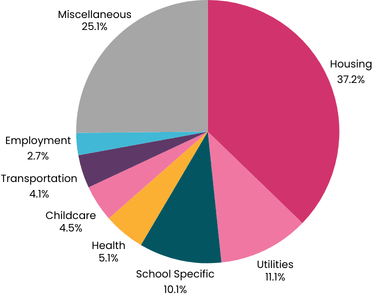
In just 18 months, the scale of the response has been staggering. Mia™ has seen over 1.3 million views, with 7,500 engaged users successfully navigating toward help. This isn’t just data; it’s a map of the challenges our neighbors are facing in real-time.
Currently, 40% of all requests coming through Mia™ are for housing resources, while 25% are from families looking for food. By tracking these trends, Mia™ doesn’t just provide a temporary fix, it helps our community understand where the “cracks” in the system are widest.
Aggregating Arizona’s Expertise
One of the most innovative aspects of Mia™ is her ability to act as a unified home for the state’s knowledge. Rather than asking social workers or families to hunt through dozens of different resource guides, we are working to aggregate the best resource lists in the state into one accessible place.
By filing these localized guides into Mia™’s interface, we ensure that a school counselor in Mesa or a parent in Yuma has the same high-quality information at their fingertips, 24/7.
How Mia™ Works (and How You Can Help)
You don’t need to be a social worker to help a neighbor navigate the system. You can simply share how to use Mia™:
- No Appointments Required: Mia™ is available anytime, day or night, with no wait times.
- Language Options: Mia™ is available in both English and Spanish.
- Targeted Support: Users can find specific help for housing, food, clothing, cell phone assistance, or heat relief.
- Localized Results: By entering a zip code, Mia™ finds the high-quality providers closest to that person’s current location.
Two Easy Ways to Connect
Helping a neighbor access Mia™ is as simple as sharing a website or a phone number.
- Via Text: Send a text message with the word ‘Family’ or ‘Familia’ to (877) 558-2261.
- Online: Visit justaskmia.org from any web browser.
Looking Ahead
Our work isn’t finished. We are continuously looking to add more resources to Mia™ to increase the breadth and depth of support available across every corner of Arizona. This evolution is only possible because of the tireless work of our Child Well-Being Impact Maker Team, whose dedication keeps this platform growing and responsive to the needs of our state.
Next time you are asked for help, you can offer more than just change. You can offer a bridge to a community of support that is ready and waiting to help that neighbor get back on their feet.